
Part II – Resilience and Renewal
Chapter VII
Women Enter The Wards
Pages 89–93
By the late nineteenth century, the wards of a few hospitals across India had begun to change in quiet but decisive ways. For decades, medicine had been taught and practised almost entirely by men. Women had appeared in hospital registers only as patients, often arriving late in illness, hesitant to speak openly, reluctant to be examined.

When women first sought entry into medical education in India, the odds were stacked against them. Even in the late nineteenth century, official opinion was that women were better suited to nursing than to being doctors. Classes for midwives existed in regional languages, but university degrees in medicine remained mostly closed to them.
In the 1870s and 1880s, formal government sanctions led to doors opening for women medical students in Madras, Calcutta and Bombay, after reformers and a few sympathetic physicians argued that women doctors were necessary to treat women patients who could not be examined by men.
For these first women medical students, it was an arduous journey. Where admission was permitted, it came with conditions. Women often sat on separate benches in lecture halls. They were excused from certain discussions in anatomy and surgery, though they were expected to pass the same examinations as their male counterparts.
So, when Grant Medical College admitted its first female students in 1883, the idea still felt experimental. Yet, from these hesitant beginnings emerged a small group of women who quietly altered the course of Indian medicine.
Annie Walke (later Dr Annie Walke Sharp)
Among the earliest of these students was Annie Walke, remembered as the first woman to qualify in medicine from an Indian university.
Born in Bombay to a Goan family and educated in Panchgani, Annie Walke entered Grant Medical College in 1883, at a time when women’s admission itself was new. She distinguished herself over the next few years, eventually receiving a university gold medal and a scholarship.
Her training quickly translated into service. She joined the Cama Hospital for Women and Children as an assistant under Dr Edith Pechey Phipson and worked there for a decade.
For these first women medical students, it was an arduous journey. Where admission was permitted, it came with conditions. Women often sat on separate benches in lecture halls.
Beyond the wards, her interests ranged widely. In 1886, she presented a paper to the Bombay Natural History Society. In 1895, she travelled to Europe and obtained an MD from Brussels University. On her return, she built up a large practice among European and Indian women, including members of princely households.
Married and later known as Dr (Mrs) Sharp, she continued working through one of Bombay’s most difficult periods. During the plague epidemic of 1898–1901, she remained on duty, eventually dying very young in 1901, aged thirty-five.
It was a brief but decisive career. At a time when women doctors were still considered improbable, Annie Walke made the presence of women in medicine appear not exceptional, but necessary.
Savita Ambedkar (née Sharada Kabir)
Among the early women to walk through the gates of Grant Medical College was Sharada Kabir.
Born in 1909 in Ratnagiri district into a Marathi Brahmin family, she grew up in a household that valued education and discipline. Her father, a registrar with the Indian Medical Council, wished that his daughter become a doctor. She agreed without hesitation.
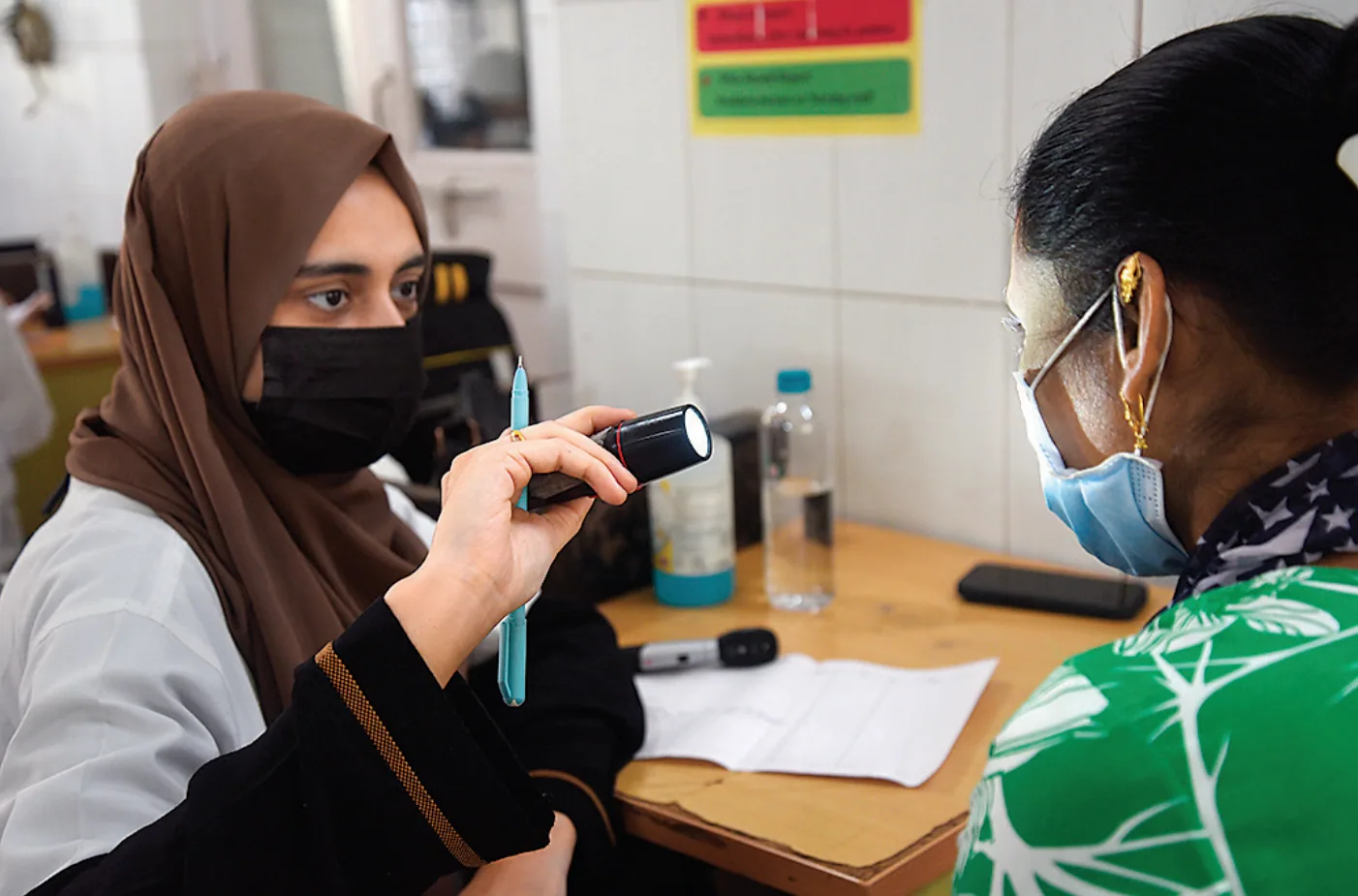
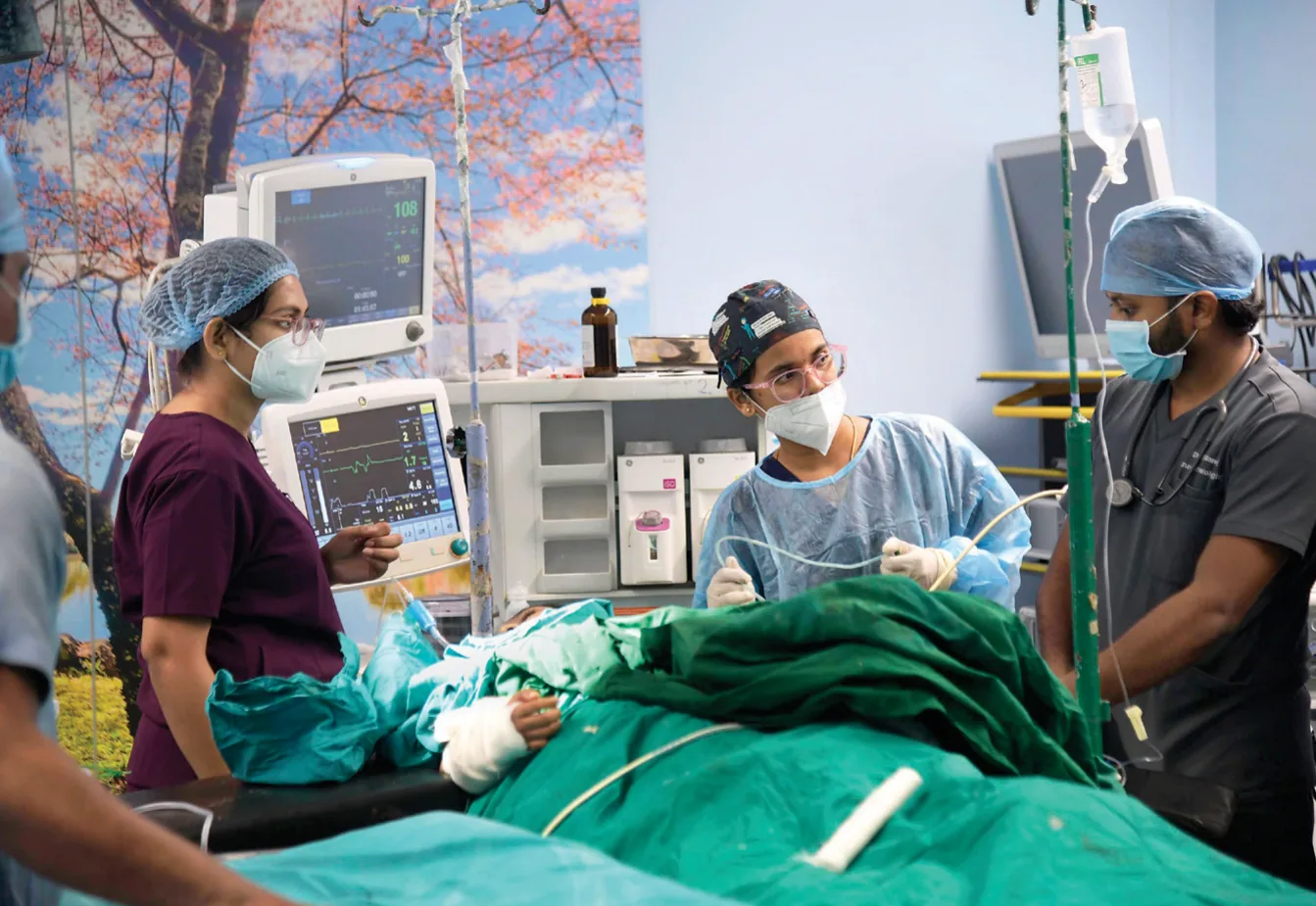
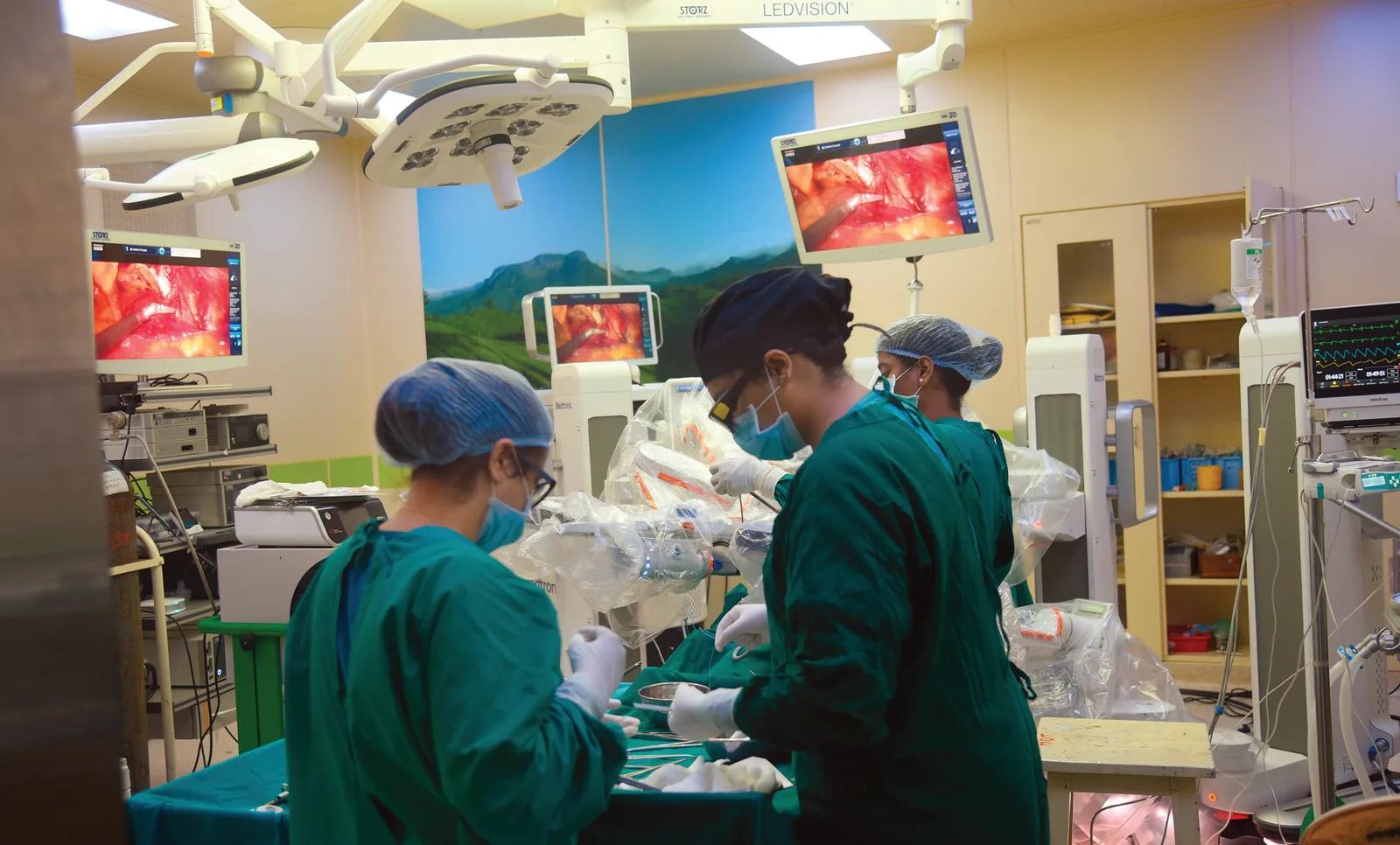
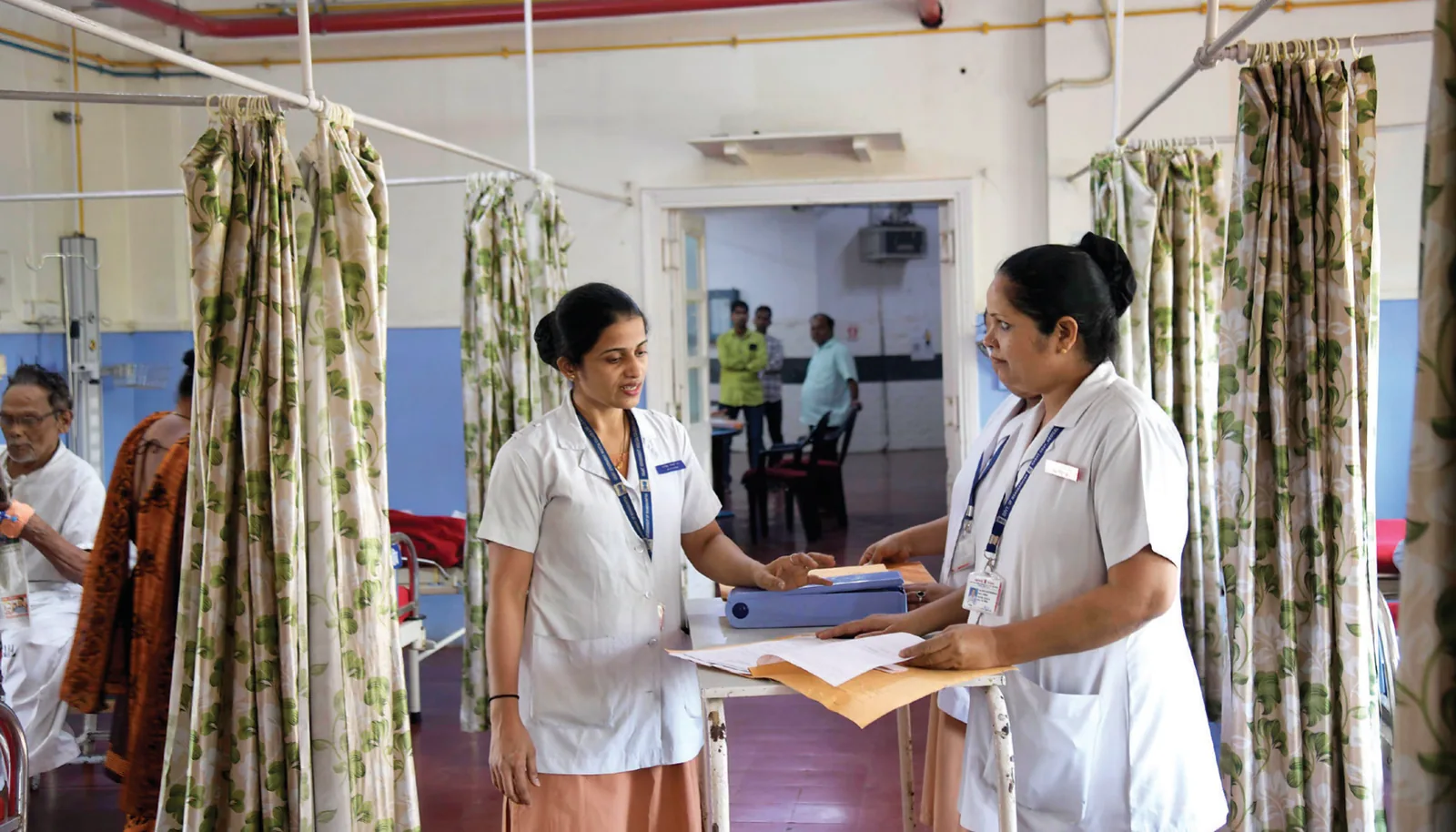
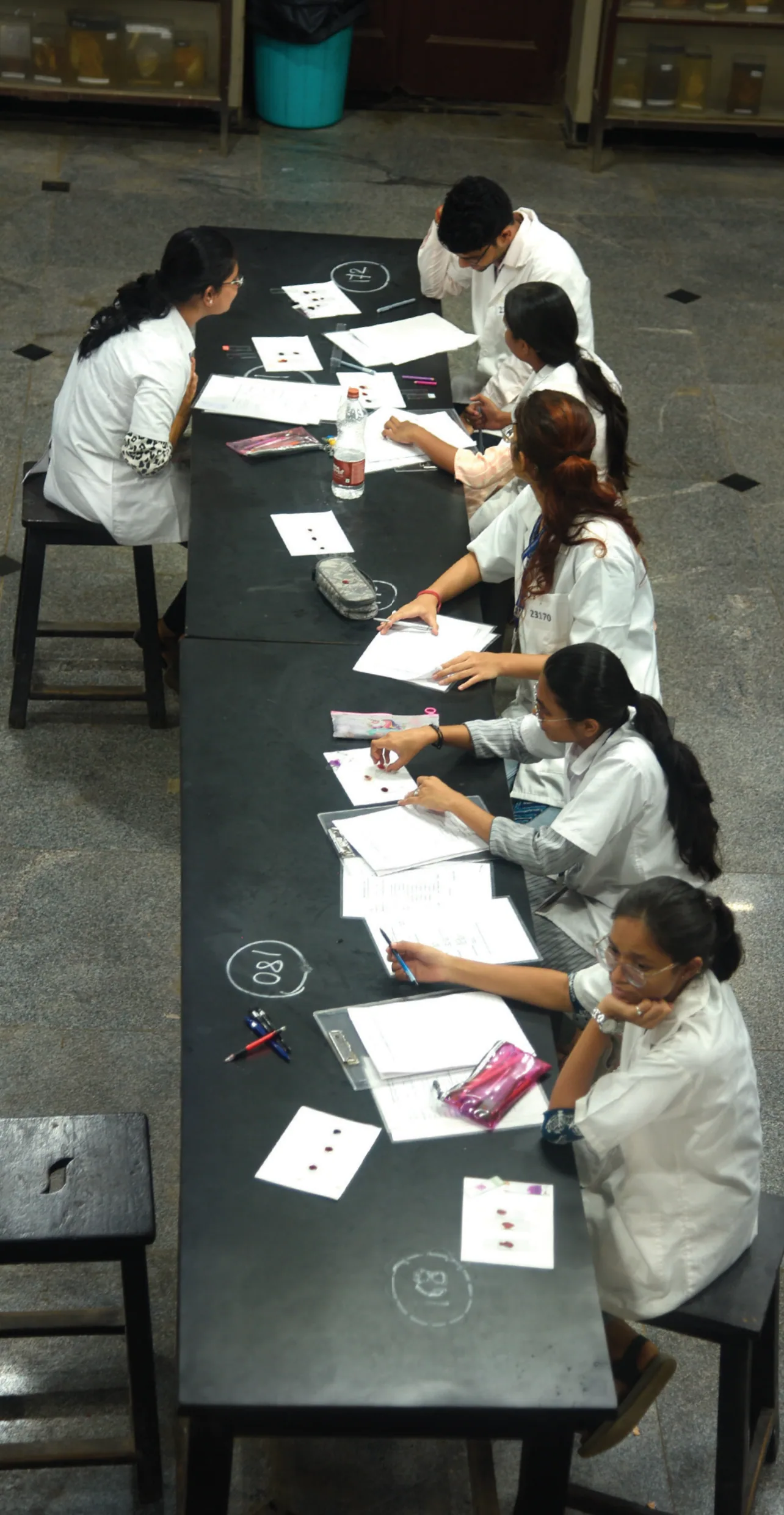
A practical class underway in the pathology department A patient is examined before admission in the ophthalmology ward Staff care for a patient in a surgery ward
Coincidentally, the hostel itself stood opposite Mani Bhavan, where political currents were shifting the country’s future. Her own world, however, remained the classroom, the ward and the textbook page. In 1937, she completed her MBBS from Grant Medical College, clearing each year with high grades. Her name was entered in the Medical Council register. For her family, the moment was extraordinary: the very idea of a woman doctor felt revolutionary.
She went on to work as chief medical officer in a hospital in Gujarat before returning to Mumbai. In the city, she later met Dr B R Ambedkar in 1947 at a mutual friend’s home. Dr Ambedkar would later seek treatment for diabetes and blood pressure with Dr Malvankar, with whom Dr Sharada Kabir was working. Their professional acquaintance gradually turned personal, and over the course of a year, they exchanged dozens of letters. They married in April 1948, and she took the name Savita Ambedkar.
Long before public life would claim her time, she had already lived the life of a physician in training, disciplined, observant and quietly determined.